Pelvic Floor Stretches: A Practical Guide
By:Author:Kegel Care Editorial
Updated on:October 16, 2026
- Do Pelvic Floor Stretches Actually Do Anything
- Stretching Versus Strengthening: Which One Does Your Pelvic Floor Need
- Why the Gentle Few Minutes Wins Over the Intense Session
- Adjusting Your Routine to Where You're Starting From
- Fitting These Movements Around a Normal Week
- Can Stretching Fix Pelvic Floor Problems Overnight
- Letting Kegel Care Guide Your Routine
- Making These Movements a Normal Part of Your Day
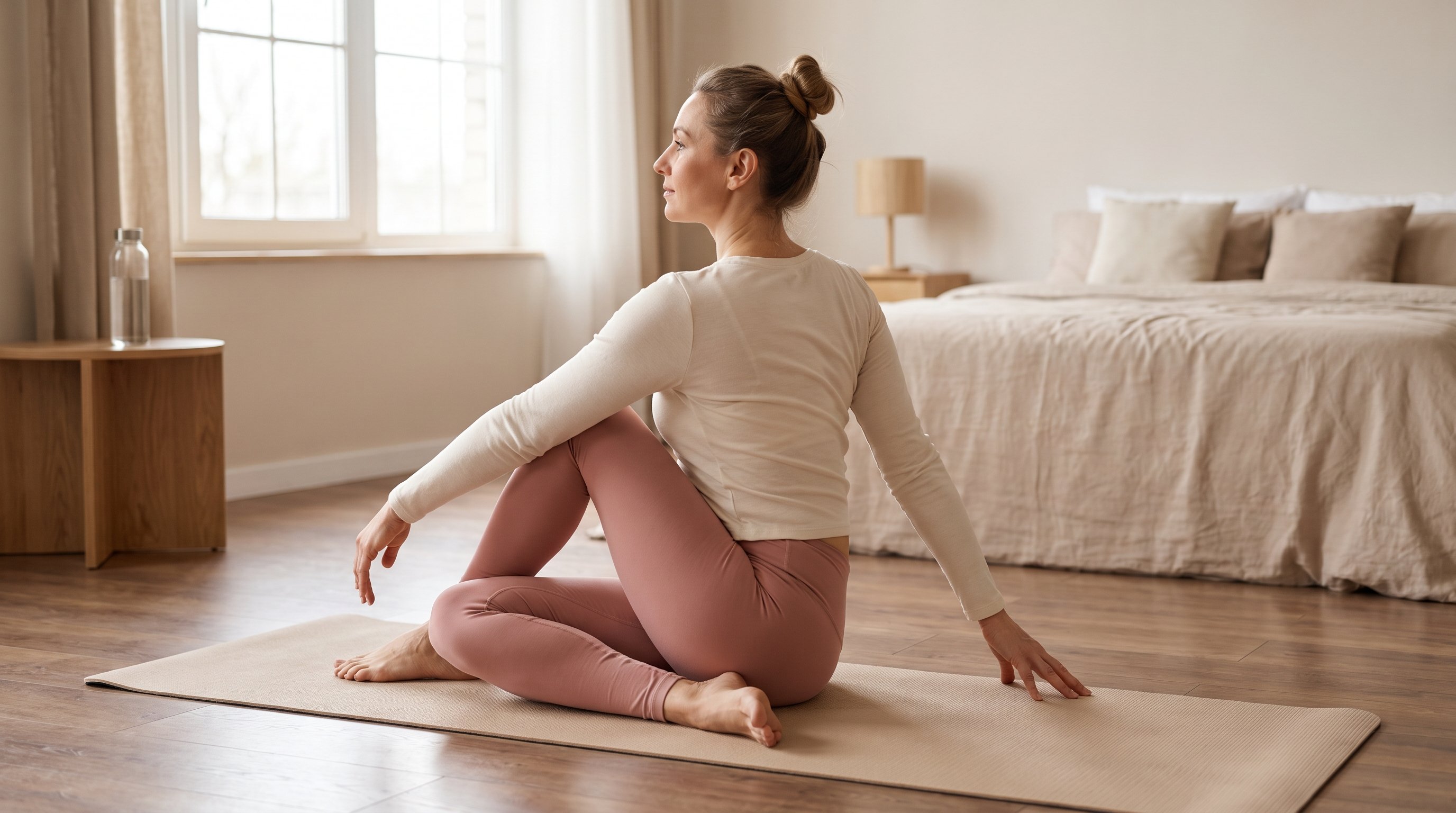
Pelvic floor stretches are slow, gentle movements - deep squats, happy baby, child's pose, diaphragmatic breathing - that lengthen and release pelvic muscles rather than contracting them like a kegel does.
The pelvic floor is a muscle group, not a mystery, and like any muscle group it can get tight as well as weak. Stretching works because tight muscles need length and release before they can contract well, so the two approaches support each other instead of competing.
This guide covers whether stretches actually do anything measurable, how they compare with strengthening exercises, who should adjust their approach, and how a guided plan can make the habit easier to keep.
Do Pelvic Floor Stretches Actually Do Anything
Mechanically, stretching works on the same principle anywhere in the body: a muscle held in a shortened position for long periods - sitting most of the day, bracing through stress - can lose some of its range, and gentle lengthening restores that range.
For the pelvic floor specifically, positions like deep squat or child's pose open the hips and let the pelvic muscles drop and lengthen instead of staying pulled tight.
Here is the honest arithmetic. A stretch held for 30 to 60 seconds, repeated through 3 to 5 positions, takes roughly 3 to 5 minutes total - small enough to do daily without it becoming a project.
Done alongside strengthening work rather than instead of it, that few minutes a day is the realistic commitment, not a dramatic overhaul of your routine.
Stretching Versus Strengthening: Which One Does Your Pelvic Floor Need
Most people assume the pelvic floor only needs strengthening, but a tight pelvic floor and a weak one can cause similar discomfort, and the fix for each is different.
The table below lays out the decision plainly so you can see where your situation actually sits.

| Goal | Stretching | Strengthening |
|---|---|---|
| Easing tension | Core focus | Not the priority |
| Building control | Supports it | Core focus |
| Time per session | 3-5 minutes | 5-10 minutes |
| Best done when | Evening or after sitting | Any time of day |
| Works best paired with | Strengthening work | Stretching work |
Neither column cancels the other out - most people need a bit of both, just not necessarily in equal measure.
Why the Gentle Few Minutes Wins Over the Intense Session
An ambitious 20-minute pelvic floor and hip-opening routine sounds thorough, but it is also the first thing to get skipped on a busy evening.
A 3 to 5 minute version - a couple of gentle releases before bed or after a long stretch of sitting - survives a bad week because it barely asks anything of your schedule.
Consistency is unglamorous and it wins anyway. Five minutes done most days adds up to more total practice over a month than twenty minutes done twice before the plan quietly falls apart.
Adjusting Your Routine to Where You're Starting From
If You're New to This Entirely
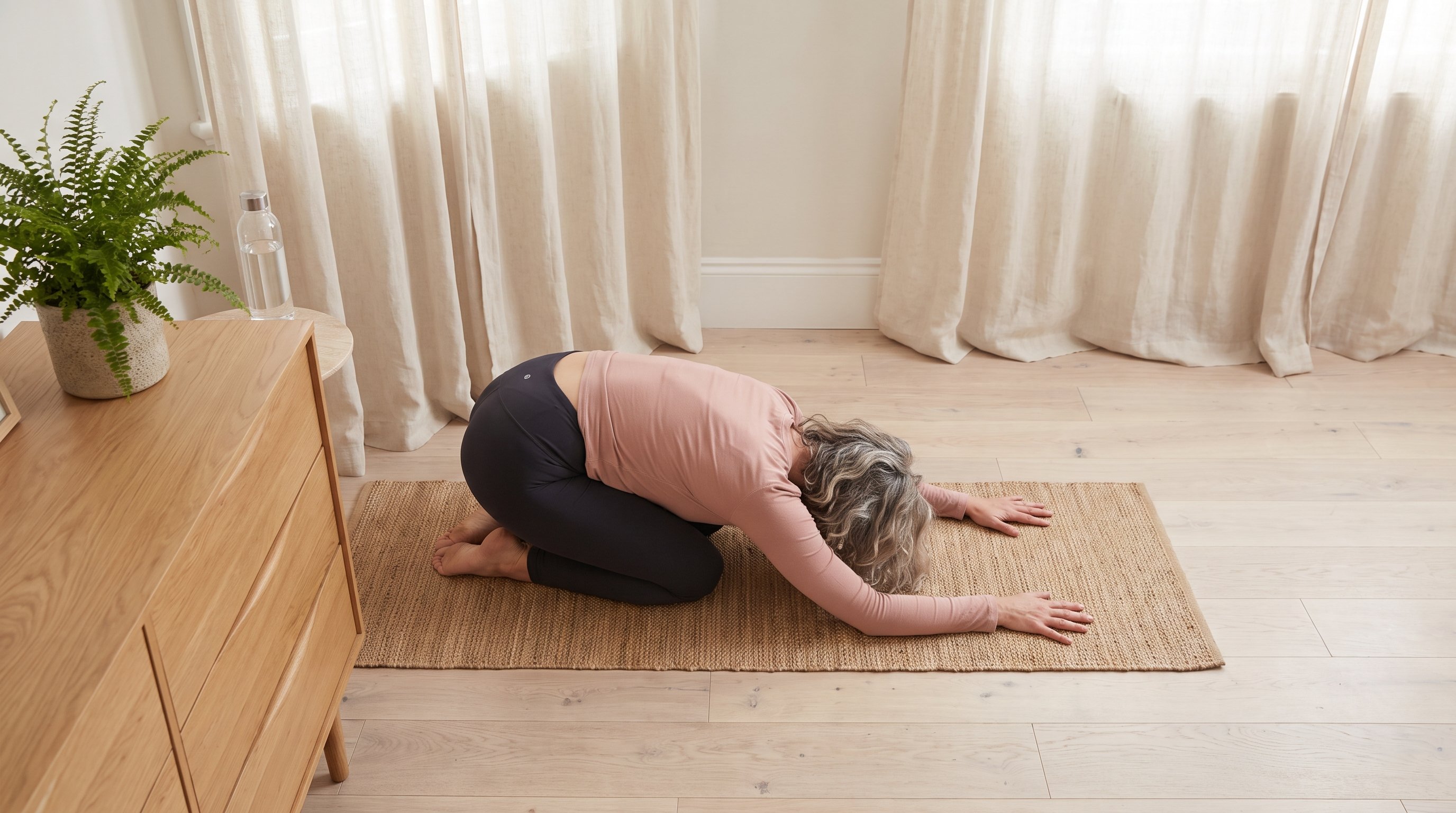
Start with just one or two movements - child's pose and deep breathing - and skip anything that pulls or pinches. Range of motion comes gradually, and forcing a deep squat on day one is not the goal.
If Your Days Are Already Full
Pair these movements with something you already do, like a couple of minutes on the floor while the kettle boils or right before you brush your teeth. Attaching the habit to an existing routine removes the need to remember it separately.
If You're Further Along in Life
Joint stiffness can make deep squats uncomfortable, so a supported version using a chair or wall for balance achieves the same lengthening without strain on the knees. Speak to a clinician if any stretch causes sharp pain rather than a mild pull.
If You've Had a Baby Recently
Pelvic tissue needs time before deep movements make sense, so gentle breathing work usually comes first and deeper positions get added back in gradually. Your own pace matters more than any fixed timeline here.
Fitting These Movements Around a Normal Week
The honest barrier to any stretching habit is not knowing which positions to use or forgetting to do them until the week has already slipped by.
A structured plan solves that by handing you the order, the timing and a reminder, rather than leaving you to reconstruct it from memory each evening.
Kegel Care includes short guided audio and video routines that walk through stretching and strengthening work in sessions built to fit an ordinary schedule, so you are not guessing what to do or how long to hold it.
The daily habit trackers also make it easier to see whether the few minutes you planned are actually happening, which matters more than any single session.
Can Stretching Fix Pelvic Floor Problems Overnight
No single stretch, and no single week of stretching, resets a pelvic floor overnight, and anyone promising that is overselling it.
The muscle group changes the same way any muscle does - gradually, with repeated and consistent input over time, not through one dramatic session.
The real answer is less exciting but more useful: a few minutes most days, kept up without needing to be perfect, is what actually shifts things over weeks rather than overnight.
Letting Kegel Care Guide Your Routine
Knowing a stretch exists is different from knowing when to do it, how long to hold it, and whether you're actually progressing.
Kegel Care brings guided audio and video routines, a tailored exercise plan, and progress trackers together so stretching and strengthening sit in one place instead of scattered across memory and good intentions.
The lifestyle challenges and the curated article library add structure beyond the individual movements themselves, which helps the habit feel like part of a routine rather than one more task competing for attention.
Strengthen Your Pelvic Floor
Rebuild Your Core Confidence
Making These Movements a Normal Part of Your Day
Pick one or two stretches, attach them to something you already do daily, and give the habit a few weeks before judging whether it's working.
That small, repeatable action beats any ambitious plan you abandon by the second week.
If you'd rather have the order and timing handed to you, Kegel Care's guided routines take that decision off your plate so the habit just has to happen, not be planned.
FAQ
They work on the same mechanism as any stretch - lengthening a shortened muscle so it has better range and can contract more effectively afterwards. The benefit shows up gradually with repeated practice, not after a single session.
No, because a tight muscle that cannot lengthen properly often cannot contract well either. Stretching and strengthening address different parts of the same system, so pairing them makes more sense than choosing only one.
Mild pulling is normal when a muscle hasn't been lengthened in a while, but sharp or shooting pain is not something to push through. Speak to a clinician if any position causes that kind of pain rather than a gentle stretch sensation.
Usually it's not the stretches themselves but forgetting the routine or not seeing anything change fast enough to feel worth it. Kegel Care's guided sessions and trackers exist for exactly that drop-off point, keeping the habit visible instead of letting it quietly disappear.
Share this post