How to Relax Pelvic Floor Muscles: The Practical Method
By:Author:Kegel Care Editorial
Updated on:October 16, 2026
- Does Relaxing the Pelvic Floor Actually Help?
- How Pelvic Floor Release Actually Happens
- How Often to Practice Pelvic Floor Relaxation
- Why Breathing Practice Beats Forcing a Stretch
- Fitting Pelvic Floor Relaxation Into a Busy Day
- Can You Relax a Tight Pelvic Floor Overnight?
- What Changes How Fast Pelvic Tension Eases
- Mistakes That Keep the Pelvic Floor Tight
- Letting Kegel Care Guide Pelvic Floor Relaxation
- Starting a Pelvic Floor Relaxation Routine Today
Relaxing pelvic floor muscles means deliberately lengthening and releasing them, usually through slow breathing paired with a conscious drop of tension, rather than squeezing harder.
A tight pelvic floor behaves like any other overworked muscle. It has forgotten how to fully lengthen, often because it has been braced for so long that bracing feels normal.
This guide covers why relaxation training works, how it differs from the squeeze-and-hold approach most people know, how much practice actually helps, and the common mistakes that keep tension stuck in place.
Does Relaxing the Pelvic Floor Actually Help?
Yes, and the mechanism is straightforward. A muscle held in a shortened position for long periods struggles to contract with full strength later, because it never returns to its resting length between efforts.
Pelvic floor muscles wrap around the base of the torso and work in cycles: contract, then fully release, then contract again. If the release step gets skipped, the muscle sits in a low-grade clench most of the day without you noticing.
The arithmetic is simple. A muscle that spends sixteen waking hours partly contracted gets far less true rest than one that drops to baseline between efforts, even if the total number of squeezes in a day is the same.
Teaching the muscle to let go on command is what relaxation training does. It is not the opposite of strength work, it is the other half of the same cycle.
How Pelvic Floor Release Actually Happens
Breath Drives the Muscle
The diaphragm and the pelvic floor move together: as you inhale, the diaphragm drops and the pelvic floor should lengthen and descend slightly, and as you exhale it should rise back up without a hard squeeze. Slow, low breathing into the belly and sides gives the pelvic floor a repeated, gentle cue to lengthen.
The Nervous System Has to Agree
Muscle tension is partly a nervous system setting, not just a physical state, so a muscle can stay braced even though you consciously try to let go. Slowing the breath and softening the jaw, shoulders and belly signals safety to the nervous system, which is often the missing step before the pelvic floor will actually drop.
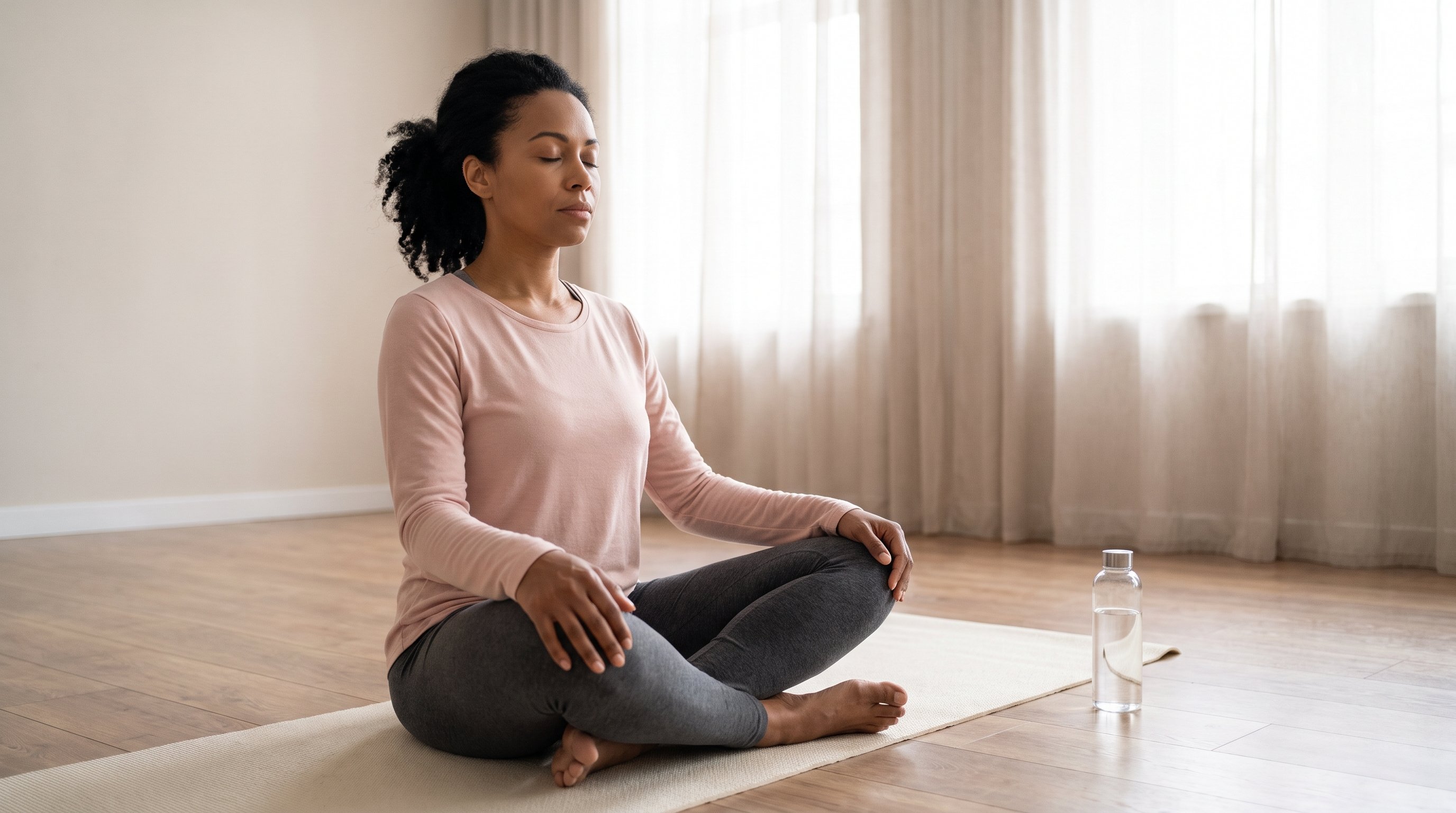
Put together, breath and nervous system calm are the two levers that make pelvic floor release possible, which is why rushing through a relaxation session rarely works as well as a slower one.
How Often to Practice Pelvic Floor Relaxation
Short and Frequent Beats Long and Rare
A few minutes of slow breathing and conscious release, done most days, teaches the muscle the pattern far faster than one long session once a week. Consistency matters more than duration here, the same way it does with strength training.
| Time of Day | Length | Focus |
|---|---|---|
| Morning | 3 to 5 minutes | Slow breathing, belly soft |
| Midday | 1 to 2 minutes | Check shoulders, jaw, pelvic floor |
| Evening | 5 to 10 minutes | Lying down, full body release |
| During stress | 30 to 60 seconds | One long exhale, drop tension |
None of these sessions need to be long. The total across a day adds up to well under twenty minutes, which fits around most schedules without rearranging anything.
Why Breathing Practice Beats Forcing a Stretch
There are two routes to a looser pelvic floor: slow, repeated breathing practice, or trying to physically force the area to stretch through sheer effort.
Forcing it rarely works, because pelvic floor muscles respond to nervous system signals more than brute stretching. Gripping harder to try to relax is a contradiction the muscle cannot resolve.
Breathing practice wins on adherence too. It can be done anywhere, needs no equipment, and does not require getting into an uncomfortable position, so people actually keep doing it.
The harder alternative also carries more risk of frustration, since forcing a muscle that will not cooperate tends to increase bracing rather than reduce it.
Fitting Pelvic Floor Relaxation Into a Busy Day
The easiest way to keep this going is to attach it to something already happening, like the first few minutes after waking or the last few minutes before sleep.
A short guided audio session removes the guesswork of pacing the breath correctly, which is often the part people give up on with practice alone.
Kegel Care includes audio and video routines built around this kind of short, guided practice, so a release session can be dropped into a lunch break or a few minutes before bed without having to plan it from scratch.
Can You Relax a Tight Pelvic Floor Overnight?
No, and anyone promising an overnight fix is not being straight with you.
A pattern of tension built up over months or years does not unwind in one session, because the nervous system needs repeated, low-pressure practice to learn a new default.
The honest answer is that relaxation is a skill, built the same way any other movement skill is built: through repetition, patience, and paying attention to small shifts rather than expecting a dramatic before-and-after.
If pelvic pain is sharp, persistent, or getting worse rather than easing with practice, that is worth raising with a clinician rather than working through alone.
What Changes How Fast Pelvic Tension Eases
Three factors matter more than any single technique for easing pelvic floor tension.
The Biggest Levers
- Consistency of practice - a few minutes most days trains the nervous system far more reliably than one long session now and then.
- Overall stress load - a nervous system that is braced all day from unrelated stress will hold the pelvic floor tight too, so general stress habits matter.
- Posture and breathing habits - shallow chest breathing and a habitually tucked pelvis both work against the pelvic floor's ability to fully lengthen.
Mistakes That Keep the Pelvic Floor Tight
Trying to Relax by Squeezing First
Some people add a hard squeeze before attempting to release, assuming contrast will help, but this often reinforces the bracing pattern instead. Skip the squeeze and go straight to slow breathing and a conscious drop.
Holding the Breath During Practice
Holding the breath while concentrating is a common habit, and it keeps the diaphragm still, which blocks the natural cue for the pelvic floor to lengthen. Keep the breath moving slowly in and out the whole time.

Practising Only When Already in Pain
Waiting until there is discomfort to try relaxing means starting from the hardest possible point. Short daily practice when things feel fine builds the skill before it is urgently needed.
Ignoring the Rest of the Body
A clenched jaw, raised shoulders or gripped belly all keep the nervous system on alert, which makes pelvic release harder regardless of technique. Scan the whole body, not just the pelvic floor, during each session.
Letting Kegel Care Guide Pelvic Floor Relaxation
Learning to release a tight pelvic floor is easier with a structure to follow, rather than guessing at pace and timing alone.
Kegel Care offers guided audio and video sessions designed to fit a real schedule, along with daily trackers that make it easy to see whether the practice is actually happening most days, not just in theory.
The hand-selected article library and lifestyle challenges inside the app also give extra context on the habits that support pelvic health more broadly, so relaxation practice sits alongside the rest of a routine rather than as an isolated task.
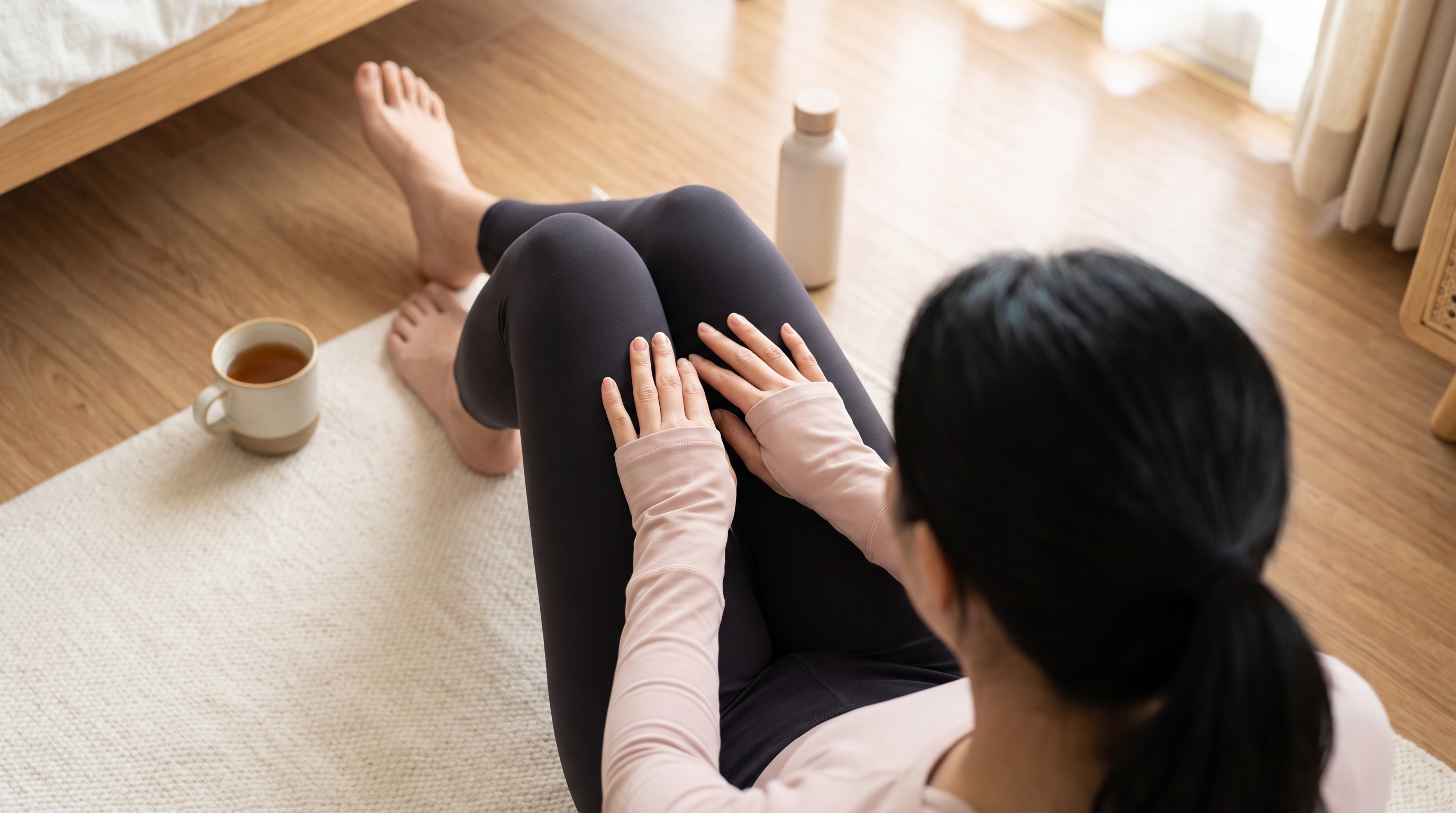
Strengthen Your Pelvic Floor
Rebuild Your Core Confidence
Starting a Pelvic Floor Relaxation Routine Today
The most useful first step is small: a few minutes of slow, belly-led breathing today, done once, without trying to fix everything at once.
Guided relaxation sessions and simple tracking can turn an occasional good intention into something that actually happens most days.
FAQ
There is no fixed timeline, since it depends on how long the tension pattern has been in place and how consistently relaxation practice happens. Most people notice small shifts in ease before they notice any dramatic change.
No, they are two halves of the same cycle, since a muscle that cannot fully release also cannot contract with full strength later. Strength and relaxation training work better together than either does alone.
Breathing is the starting point, but overall stress levels, posture habits and persistent pain can all slow progress regardless of technique. If tension stays sharp or worsens despite regular practice, it is worth speaking to a clinician rather than continuing alone.
An app cannot replace a clinician, but Kegel Care's guided audio and structured timing remove a lot of the guesswork that makes people give up early. Guided sessions and daily trackers help keep short relaxation practice consistent, which is the factor that matters most.
Share this post