Bladder Irritating Foods: A Practical Guide
By:Author:Kegel Care Editorial
Updated on:October 16, 2026

- How to Spot Your Own Bladder Triggers
- How Much of These Foods Is Actually Worth Watching
- Fitting Bladder-Friendly Eating Into a Normal Week
- A Four-Week Way to Test Your Diet Changes
- When Changes From Cutting Bladder Irritants Tend to Show
- Mistakes That Blur Your Bladder Food Results
- Pairing Kegel Care With Bladder-Friendly Food Choices
- Putting Bladder-Friendly Choices Into Your Own Routine
Bladder irritating foods are the ones that can make you feel like you need the toilet more often or more urgently, usually because of acidity, caffeine, alcohol or added sugar. Common examples include coffee, citrus fruit, carbonated drinks, spicy food and artificial sweeteners.
The bladder lining can react to certain compounds the same way skin reacts to a rough fabric - not everyone feels it, and the ones who do feel it to different degrees. This isn't about one food causing damage; it's about patterns of intake and how your own bladder happens to respond.
This guide covers how to spot your own triggers, how much is actually worth worrying about, a simple starter plan, the mistakes that keep people stuck, and where muscle training fits alongside diet.
How to Spot Your Own Bladder Triggers
Working out which foods bother your bladder is a process of elimination, not guesswork, and it doesn't need to be complicated.
A Simple Way to Find Your Triggers
- Keep a short diary - note what you ate or drank and when you felt urgency or needed the toilet.
- Look for a pattern over a week - one odd day doesn't mean much, but a repeat pattern does.
- Remove one suspect at a time - cut just coffee, or just fizzy drinks, rather than everything at once.
- Wait a few days before judging - give your bladder time to settle before deciding if the change made a difference.
- Reintroduce slowly - add the food back in a small amount to confirm it was actually the cause.
- Track fluid volume too - sometimes it's the amount you're drinking, not what's in it.
- Note stress and sleep - both can change how sensitive the bladder feels on a given day.
How Much of These Foods Is Actually Worth Watching
A Rough Guide to Common Culprits
There's no universal cut-off, because sensitivity varies, but some foods and drinks come up more often than others as bladder irritants.
Use the table below as a starting reference, then adjust based on what your own diary shows.
| Food Or Drink | Why It's Flagged | Simple Swap |
|---|---|---|
| Coffee and caffeinated tea | Caffeine can increase urgency | Decaf or herbal tea |
| Citrus fruit and juice | High acidity | Pear or melon |
| Carbonated drinks | Fizz and often caffeine | Still water |
| Spicy food | Can irritate the bladder lining | Milder seasoning |
| Artificial sweeteners | Linked to urgency in some people | Small amount of sugar |
Fitting Bladder-Friendly Eating Into a Normal Week
Nobody wants to give up coffee and citrus forever, and the good news is that most people don't have to - it's about finding your own threshold rather than cutting everything out.
Diet is one half of bladder comfort; the muscles that support the bladder are the other half, and they respond to training the same way any muscle does.
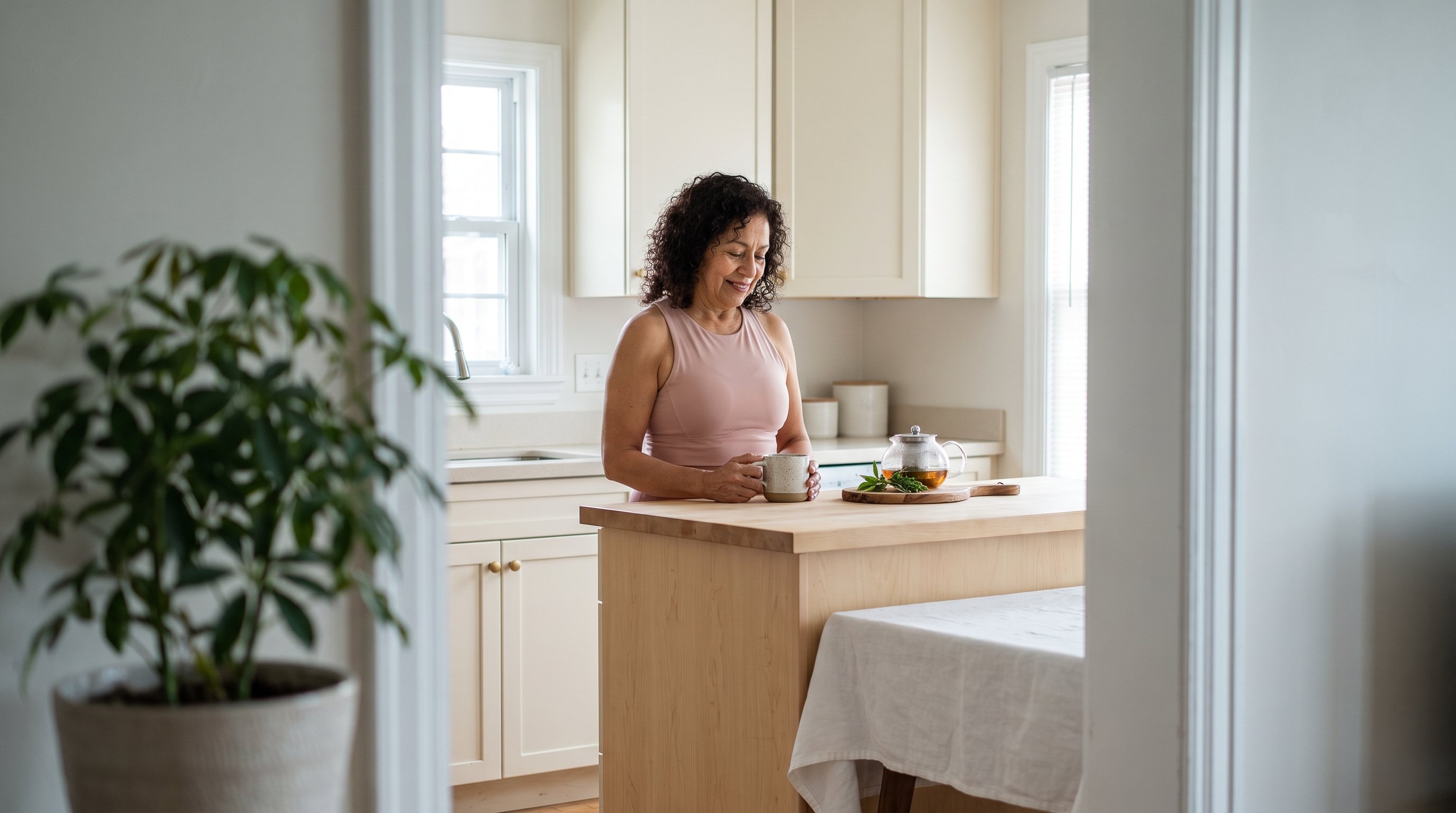
Pelvic muscle training sits alongside diet changes rather than replacing them, with guided Kegel exercise sessions built to strengthen the pelvic muscles that help with bladder control.
Pairing a food diary with daily hydration tracking inside app trackers makes it easier to see which lever - diet or muscle - is actually making the difference.
A Four-Week Way to Test Your Diet Changes
This isn't a diet plan - it's an order of operations that makes cause and effect easier to see.
| Stage | What To Do |
|---|---|
| Week 1 | Track food, drink and bladder symptoms daily |
| Week 2 | Remove one top suspect, such as coffee |
| Week 3 | Hold steady and watch for change |
| Week 4 | Reintroduce slowly and confirm the trigger |
When Changes From Cutting Bladder Irritants Tend to Show
Most people won't notice a difference overnight, and that's normal - the bladder lining and the habits around it both take a bit of time to settle.
Some people feel a change within the first couple of weeks of removing a trigger; for others it takes longer, especially if more than one food is involved.
This is the point where a lot of people give up, right before the pattern would have become clear - sticking with the diary a little longer usually tells you more than stopping early.
Speak to a clinician if urgency, pain or frequency changes suddenly or feels severe, since diet adjustments on their own aren't a substitute for that conversation.
Mistakes That Blur Your Bladder Food Results
Cutting Everything at Once.
Removing coffee, citrus, fizzy drinks and spice all in the same week makes it impossible to know which one mattered - change one thing at a time.
Judging Too Soon.
A single symptom-free day doesn't confirm anything - give each change several days before drawing a conclusion.

Ignoring Fluid Volume.
Drinking less isn't the answer and drinking far more than usual can mask or mimic a food reaction - keep total fluid roughly steady while you test.
Skipping the Diary.
Memory is unreliable after a few days - write things down as they happen rather than trying to recall them later.
Forgetting the Muscle Side.
Diet changes address what reaches the bladder, not how well the surrounding muscles manage urgency - pelvic muscle training covers the part diet can't.
Pairing Kegel Care With Bladder-Friendly Food Choices
Diet changes narrow down what's irritating the bladder; muscle training changes how well the bladder is supported day to day, and the two work on different parts of the same problem.
Kegel Care offers guided Kegel exercise sessions designed to strengthen the pelvic muscles and improve control, alongside daily hydration and wellness trackers that make it easier to see your own patterns.
The lifestyle challenges and specialist-curated article library give you small, repeatable habits to layer on top of whatever you learn from your food diary, and the audio and video routines fit around a normal schedule rather than demanding a gym visit.
Strengthen Your Pelvic Floor
Rebuild Your Core Confidence
Putting Bladder-Friendly Choices Into Your Own Routine
Start with the diary, remove one suspect at a time, and give each change a fair trial before deciding what stays off your plate for good.
Pairing that process with guided pelvic muscle tracking and exercise sessions means you're working on both sides of bladder comfort at once, not just the diet half.
FAQ
Coffee, citrus fruit, carbonated drinks, spicy food and artificial sweeteners come up most often as triggers. Sensitivity varies a lot between people, so a food diary is the best way to confirm your own list.
Not necessarily - many people find a threshold they can tolerate rather than needing to avoid a food entirely. The point of the diary is finding that threshold, not banning foods outright.
Diet only addresses what reaches the bladder, not how well the pelvic muscles manage urgency or control. Kegel Care's guided exercise sessions target that muscle side directly, alongside trackers that help you keep tabs on both diet and symptoms.
There's no fixed timeframe, and it varies from person to person. Give each change at least a week or two before deciding whether it made a difference.
Share this post