Bladder Control Exercises: Choosing How You Train Daily
By:Author:Kegel Care Editorial
Updated on:October 16, 2026

- The Core Steps Behind Every Bladder Control Session
- How Many Bladder Control Reps Actually Add Up
- Making Bladder Training Realistic on a Busy Day
- A Four-Week Starting Plan for Bladder Control Work
- When Bladder Control Progress Tends to Show Up
- Mistakes That Quietly Undermine Bladder Training
- Simplifying Bladder Control Training With Guided Sessions
- Turning Bladder Control Exercises Into a Daily Habit
Bladder control exercises work by training the pelvic floor muscles that support the bladder and help you hold on when you need to. The short version: a few focused squeezes done correctly, most days, train these muscles the same way any other muscle group responds to regular use.
The mechanism is straightforward. The pelvic floor is a sling of muscle that lifts and tightens around the urethra - practice the right squeeze often enough and that sling gets better at responding quickly, including in the moments that matter, like a cough or a sudden urge.
This guide covers the actual steps, how often to train, a four-week starting plan, the mistakes that quietly undo progress, and where a guided routine fits in if going it alone hasn't stuck before.
The Core Steps Behind Every Bladder Control Session
Before adding reps or routines, it helps to get the basic movement right. These steps apply whether you're brand new to this or restarting after a break.
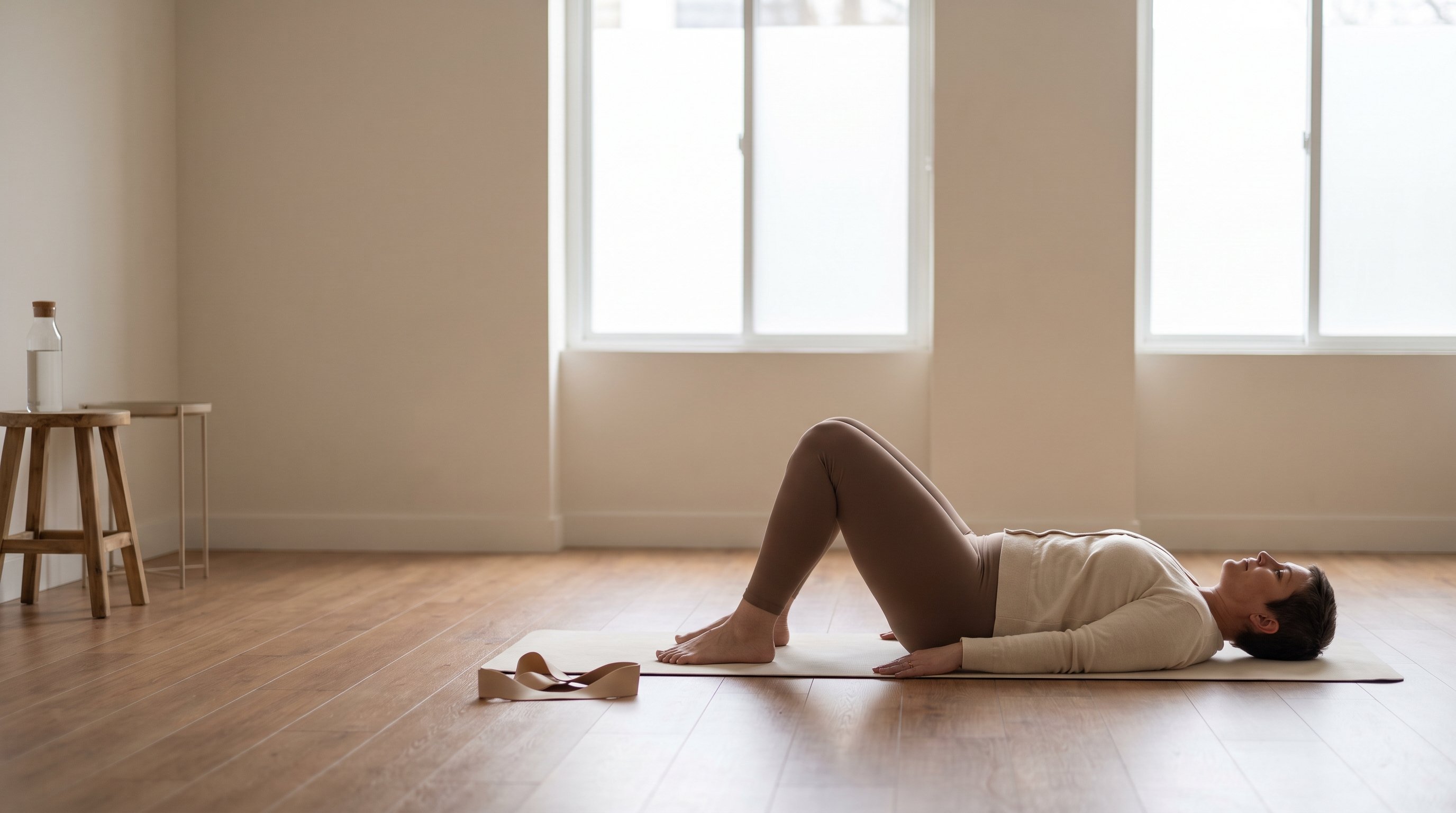
Steps to a Proper Bladder Control Session
- Find the right muscle - try stopping the flow of urine midstream once, just to feel which muscle engages, then stop doing it in the toilet going forward.
- Get into a neutral position - sit or lie down with your body relaxed, nothing clenched in the stomach, thighs or buttocks.
- Squeeze and lift - contract the pelvic floor as if drawing it upward and inward, holding the breath steady rather than holding it in.
- Hold briefly - keep the squeeze for a few seconds before releasing fully, so the muscle actually rests between reps.
- Release completely - a full let-go matters as much as the squeeze, since a muscle that never relaxes can't contract well either.
- Repeat for a short set - a handful of slow squeezes, then a handful of quicker ones, makes up one round.
- Breathe normally throughout - holding your breath adds pressure in the wrong direction, so keep breathing steady from the first rep to the last.
How Many Bladder Control Reps Actually Add Up
A Simple Daily Target
There's no need to overcomplicate the numbers here. A short daily session, split between slow holds and quicker squeezes, is enough to make this a repeatable habit rather than a chore.
| Approach | What It Looks Like |
|---|---|
| Slow holds | Squeeze and hold a few seconds, release fully, repeat |
| Quick squeezes | Fast contract-release cycles to build reaction speed |
| Daily sessions | One to two short rounds spread across the day |
| Rest days | None needed, this muscle responds well to daily light use |
Making Bladder Training Realistic on a Busy Day
The exercise itself takes very little time, so the real obstacle is remembering to do it at all. Most people who stop didn't fail the exercise, they just lost track of it among everything else going on.

Anchoring the habit to something already happening every day - the kettle boiling, a red light at the same junction, brushing teeth - removes the need to remember it as a separate task.
This is where guided audio sessions tend to help the most: they fit into those small pockets of time, and a daily tracker keeps the habit visible instead of forgotten.
A Four-Week Starting Plan for Bladder Control Work
The order of this plan matters more than hitting a precise number. Each stage builds on the control learned in the last one.
| Stage | Focus |
|---|---|
| Week 1 | Learn the correct squeeze, short daily sessions |
| Week 2 | Add quick squeezes alongside the slow holds |
| Week 3 | Practice the squeeze during daily moments, like standing up |
| Week 4 | Build consistency, aim for the same time each day |
When Bladder Control Progress Tends to Show Up
This is the point where most people want a firm number of weeks, and honestly, it varies too much person to person to promise one. What's more useful is knowing where people usually lose patience.
The early stretch can feel like nothing is happening, because the changes are subtle before they're noticeable. Sticking with short daily sessions through that quiet period is usually what separates people who keep going from people who stop just before things start to feel different.
Speak to a clinician if bladder control issues are sudden, painful, or affecting daily life beyond what feels manageable, since exercise alone isn't the right answer for every situation.
Mistakes That Quietly Undermine Bladder Training
Clenching the Wrong Muscles
Tightening the stomach, thighs or buttocks instead of the pelvic floor is common and makes the exercise far less effective. Slow down and check that the squeeze feels isolated before adding reps.
Holding the Breath
Breath-holding adds downward pressure that works against the lift you're trying to build. Keep breathing at a normal pace through every rep.
Skipping the Full Release
A muscle that never fully relaxes between squeezes doesn't get stronger, it just stays tense. Treat the release as its own deliberate step, not an afterthought.
Practicing Only on the Toilet
Using urination to check in on the muscle occasionally is fine, but doing full sessions there can interfere with normal bladder emptying. Keep the actual practice sessions separate from bathroom visits.
Expecting a Quick Fix
Looking for a dramatic shift in a few days leads most people to quit right before consistency would have paid off. Short, repeatable sessions beat an intense burst that fizzles out.
Simplifying Bladder Control Training With Guided Sessions
Knowing the right squeeze is one thing, remembering to actually do it every day is another challenge entirely.
Kegel Care gives you a tailored-for-you plan of short, guided sessions so you're never guessing whether you're doing the exercise correctly or how many reps make up a session. Daily trackers keep the habit visible, lifestyle challenges add variety so it doesn't get stale, and the audio and video routines mean you can train during a commute, a lunch break, or while the kettle boils.

Strengthen Your Pelvic Floor
Rebuild Your Core Confidence
Turning Bladder Control Exercises Into a Daily Habit
The single most useful thing to do after reading this is pick one daily anchor - a kettle, a red light, a toothbrush - and attach a short session to it starting today.
Whether you build that habit alone or let Kegel Care guide the structure, the muscle responds to the same thing either way: showing up, most days, without needing to overthink it.
FAQ
They work by training a muscle that genuinely responds to regular use, the same way any other muscle does. The results depend on doing the right squeeze consistently rather than occasionally.
Bladder control exercises and Kegel exercises both target the pelvic floor, so the core movement overlaps closely. The framing differs slightly depending on whether the focus is bladder timing or broader pelvic strength.
That's the most common barrier, not the exercise itself being too hard. Linking sessions to an existing daily habit, or using guided reminders and trackers, tends to solve this more reliably than willpower alone.
Early changes are often too subtle to notice day to day, which makes it feel like nothing is happening. Staying consistent through that quiet stretch is usually what it takes before things start to feel noticeably different.
Share this post