Reverse Kegels: A Beginner's Guide To Releasing Tension
By:Author:Kegel Care Editorial
Updated on:October 22, 2026
- What a Week of Releasing Practice Looks Like
- How Often to Practise the Release Technique
- Why the Gentle Approach Outlasts Forcing It
- Working This Practice Into a Normal Day
- Who This Release Work Suits and How to Adjust It
- When the Release Pattern Starts to Feel Familiar
- Learning the Release Technique With Kegel Care
- Making Release Work Part of Your Routine
This move is the opposite of a squeeze: instead of lifting and tightening the pelvic floor, you let it lengthen and soften on purpose. Most people have never practised this on purpose, because nobody ever taught them the release half of the equation, only the squeeze.
The pelvic floor is a sling of muscle that can hold tension the same way your shoulders or jaw do without you noticing. Learning to drop that tension, on command, trains the muscle to move through its full range instead of sitting in a half-clenched default.
This article covers what a practice week looks like, how often to do it, why the gentler approach tends to stick, and how to fit it around a normal life.
What a Week of Releasing Practice Looks Like
There's no need to overhaul your week to fit this in. A short daily slot, paired with slow breathing, is enough to build the pattern.
A Sample Week
- Monday to Friday, morning - two minutes of slow belly breathing, letting the pelvic floor soften on every exhale
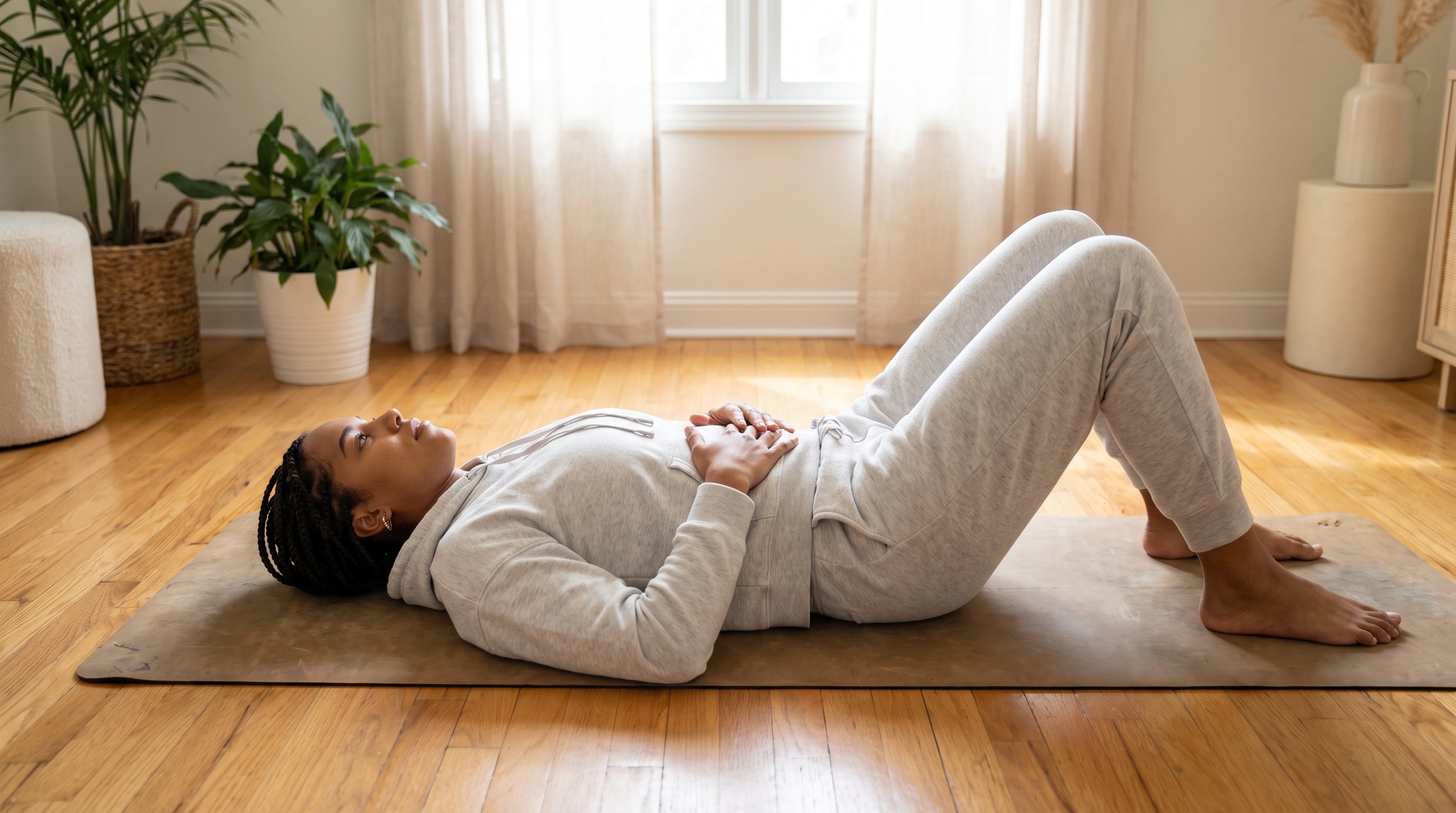
- Monday, Wednesday, Friday, evening - five slow release breaths before bed, lying down with knees bent
- Tuesday and Thursday - a longer ten-minute session pairing breath with gentle hip and lower back movement
- Weekend - one unhurried session, no clock watching, just noticing where tension sits
How Often to Practise the Release Technique
Frequency matters more than duration here. Short, regular sessions teach the muscle to let go reliably, rather than only during a single long stretch once a week.
A Simple Starting Frequency
Daily short sessions, five to ten breaths each, give the nervous system repeated practice at the release pattern without turning it into a chore.
| Frequency | Focus |
|---|---|
| Daily, 2 minutes | Breath-led release |
| 3x per week, 5 minutes | Release with gentle movement |
| Weekly, 10 minutes | Unhurried full session |
| As needed | Quick release during a stressful moment |
Why the Gentle Approach Outlasts Forcing It
Picture two approaches side by side: forcing a long, strained stretch once in a while, versus short, calm breathing practised most days. The forced version feels productive in the moment but is easy to skip when you're tired or busy.
The gentler, breath-led version takes almost no effort to start, so it survives a busy week. A muscle pattern changes through repetition, not through intensity, so the approach you'll actually repeat is the one that works.

This is the same logic behind short daily habits anywhere in fitness: the unglamorous, repeatable version beats the occasional heroic effort.
Working This Practice Into a Normal Day
This fits best as an add-on to something you already do, not a new appointment in your diary. Try it while the kettle boils, during the last few minutes before sleep, or sitting in the car before you walk into work.
Kegel Care includes audio and video routines you can follow along to, so you don't have to guess whether you're doing the breathing pattern right.
Having the routine in one place, alongside daily habit trackers, makes it easier to notice whether you actually did it this week rather than relying on memory.
Who This Release Work Suits and How to Adjust It
If You're New to This
Start with just the breathing, no movement added, until the release sensation feels familiar. Two minutes a day for the first week is plenty.
If You're Short on Time
Fold it into something you already do standing in a queue, brushing your teeth, or waiting for a page to load. Five slow breaths takes under a minute.

If You're Older or New to Pelvic Work Generally
Go slower and keep sessions short, since the goal is noticing tension, not chasing a number of repetitions. Comfort matters more than pace here.
If You Suspect You're Already Tense Down There
This release-focused approach is often the better starting point compared with jumping straight into squeezing exercises. Speak to a clinician if you notice persistent discomfort, pain, or difficulty fully releasing, since that's worth checking rather than guessing at.
When the Release Pattern Starts to Feel Familiar
Be wary of anyone promising a fast fix here. What tends to happen first is simply noticing tension you didn't know was there, which is progress even though it doesn't feel dramatic.
This is often where people quit, right at the point where the change feels too small to matter. Staying with the short daily practice past that flat stretch is usually what makes the difference over time.
Learning the Release Technique With Kegel Care
Getting the release pattern right by guesswork is hard, because you can't see your own pelvic floor the way you can watch your arm move.
Kegel Care pairs guided audio and video sessions with a tailored plan, so the release work sits alongside your regular pelvic floor routine instead of becoming one more thing to remember on your own.
Strengthen Your Pelvic Floor
Rebuild Your Core Confidence
Making Release Work Part of Your Routine
Pick one moment today, the kettle, the commute, the last five minutes before sleep, and attach five slow release breaths to it. That's the whole starting point, nothing more complicated than that.
Kegel Care can hold the routine for you so it's there tomorrow, not just today.
FAQ
It trains the pelvic floor to move through its full range, both squeezing and letting go, rather than sitting permanently half-tight. That fuller range is the point, not a single dramatic result.
No, release and squeeze work are two halves of the same skill, not opposites competing with each other. A muscle that can only squeeze and never let go isn't actually fully trained.
That's common at the start, since most people have never paid attention to this muscle releasing before. Slowing down the breath and starting with shorter sessions, guided through Kegel Care's audio routines, usually makes the sensation easier to find.
It becomes easier to remember once it's attached to something you already do daily, like brushing your teeth or making tea. Tracking it for a couple of weeks is usually enough to turn it into a habit rather than a task.
Share this post