Pelvic Floor Stretches: A Calm Guide To Easing Tension
By:Author:Kegel Care Editorial
Updated on:October 28, 2026
- No, Stretching Will Not Undo Years of Tension in One Session
- How Pelvic Floor Stretches Actually Release Tension
- What Actually Changes Your Stretching Results
- A Sample Week for Easing Pelvic Floor Tension
- Making Pelvic Floor Stretches Fit Your Day
- When Pelvic Floor Tension Starts to Ease Up
- Mistakes That Undo Pelvic Floor Stretch Progress
- Pairing Kegel Care With Your Stretch Routine
- Starting Your Stretch Practice Without Overthinking It
Pelvic floor stretches are slow, gentle movements that lengthen and release the muscles at the base of your pelvis, rather than tightening them the way a Kegel does. They help when those muscles are holding too much tension, which can show up as discomfort, a constant urge to use the bathroom, or tightness during sex.
The mechanism is simple: muscles that stay contracted for long periods - from stress, posture, or overdoing strengthening work - need a counterbalance. Stretching cues the nervous system to let go, the same way your shoulders drop after a long exhale.
This article covers the myth that stretching alone fixes everything overnight, how the release actually works, what changes the result, a sample week, how to fit it into real life, a realistic timeline, common mistakes, and where pelvic floor stretching tools fit in.
No, Stretching Will Not Undo Years of Tension in One Session
It would be nice if one deep squat or one long exhale released a pattern that took years to build. That is not how muscle tension works, and anyone promising a fast fix is skipping the honest part.
Pelvic floor muscles respond the same way other muscles do: repeated, gentle signalling over time, not a single dramatic session.
The real answer is unglamorous but true. Short, regular stretching sessions, done consistently, give the muscles repeated chances to practise letting go, and that practice is what builds lasting ease rather than a one-off release.
How Pelvic Floor Stretches Actually Release Tension
There are two separate things happening when you stretch this area, and understanding both helps the practice make sense instead of feeling vague.
Lengthening the Muscle Fibres
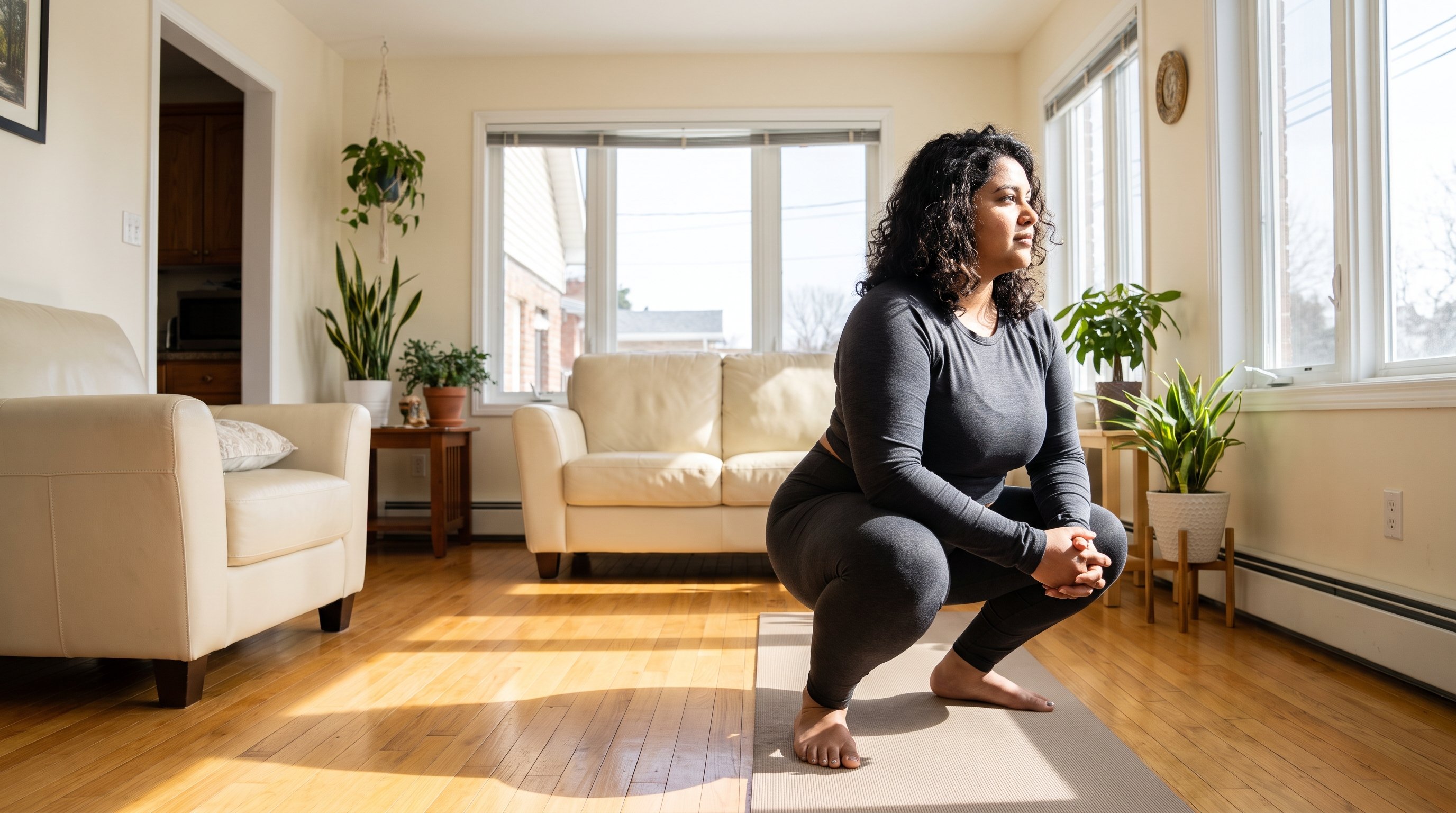
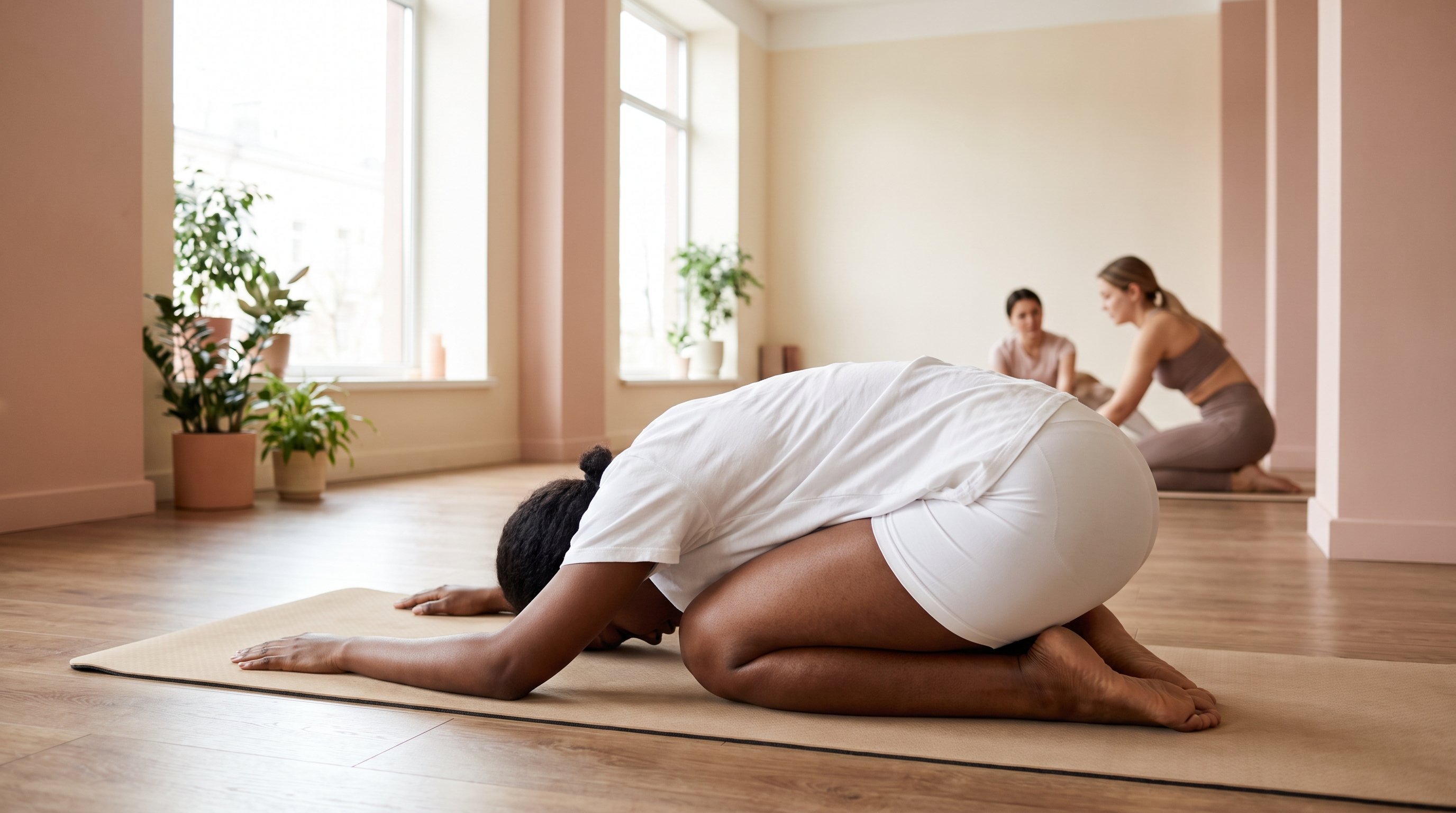
Holding a position like a deep squat or child's pose gently lengthens the pelvic floor muscles, giving fibres that have been chronically shortened a chance to stretch out gradually, rather than being forced.
Calming the Nervous System Signal
Slow breathing paired with the stretch sends a signal to relax rather than brace, which matters because pelvic floor tension is often a stress response as much as a physical one.
Together, these two parts are why breathing is usually built into pelvic floor stretch instructions rather than treated as an afterthought.
What Actually Changes Your Stretching Results
Not every stretch session gives the same payoff. Three factors tend to matter more than the rest.
Factors That Make the Biggest Difference
- Breathing through the stretch - holding your breath keeps the muscles braced, which cancels out the point of stretching in the first place
- Consistency over intensity - a few gentle minutes most days beats one long forceful session that leaves you sore
- Pairing with posture awareness - sitting hunched for hours can quietly re-tighten what the stretch just released, so how you sit matters too
A Sample Week for Easing Pelvic Floor Tension
Here is one way to structure a week without it taking over your schedule.
A Realistic Weekly Rhythm
- Monday, Wednesday, Friday - five minutes of deep squat holds and child's pose with slow breathing
- Tuesday, Thursday - a short seated forward fold and happy baby pose before bed
- Saturday - a longer ten minute session combining several stretches at an easy pace
- Sunday - rest, or just notice how your body feels after the week

None of this needs special equipment. A mat, a quiet corner, and a few spare minutes are enough.
Making Pelvic Floor Stretches Fit Your Day
The sessions above are short on purpose, because the biggest obstacle is usually not knowing the stretches, it is remembering to actually do them.
Attaching the stretch to something you already do - after brushing your teeth, before bed, during a TV ad break - removes the need to rely on memory alone.
A pelvic floor stretching app keeps audio and video routines in one place with guided sessions built to fit your schedule, so you are following along rather than guessing at form or timing.
When Pelvic Floor Tension Starts to Ease Up
People tend to quit around the point where nothing seems to be happening yet, which is usually before the nervous system has had enough repetition to shift its default pattern.
Expect the early stretches to feel like effort more than relief, and expect that to change gradually rather than suddenly.
If you notice ongoing pain, numbness, or symptoms that are not easing with gentle practice, speak to a clinician rather than pushing through alone.
Mistakes That Undo Pelvic Floor Stretch Progress
Forcing the Stretch Deeper Than Feels Right
Pushing past a gentle stretch sensation tends to trigger the muscle to brace rather than release, so ease back to where it feels comfortable instead.
Holding Your Breath Throughout
Breath holding is the most common habit that cancels the release, so count slow breaths instead of counting seconds.
Only Stretching and Never Strengthening
A pelvic floor that is only ever stretched can end up weak, so pairing release work with strengthening when appropriate keeps the balance even.
Expecting a Straight Line of Progress
Some days will feel looser than others for reasons unrelated to effort, and that unevenness is normal rather than a sign something is wrong.
Pairing Kegel Care With Your Stretch Routine
Stretching works best alongside a clear sense of how your pelvic floor is doing overall, rather than as an isolated habit done blind.
Kegel Care brings guided audio and video routines, daily habit trackers, and a hand-selected article library together, so stretching sits alongside the rest of your pelvic health practice instead of standing apart from it.
The challenges feature also gives you small, structured changes to try each week, which can keep stretching from becoming the one habit you forget.
Strengthen Your Pelvic Floor
Rebuild Your Core Confidence
Starting Your Stretch Practice Without Overthinking It
Pick one stretch, do it tonight, and keep the session short enough that skipping it feels harder to justify than doing it.
Apps like Kegel Care can carry the rest - the reminders, the tracking, the guided sessions - once you have decided the habit itself matters.
FAQ
Most people with tension-related symptoms notice some ease with consistent gentle practice, though the pace and extent vary from person to person. If symptoms persist or worsen, speak to a clinician rather than relying on stretching alone.
Stretching on its own is not the same as weakening the muscle, since the goal is releasing excess tension rather than reducing strength. Pairing stretches with strengthening work keeps the balance even over time.
Tightness, discomfort, or a constant urge to use the bathroom often point toward needing release work rather than more strengthening. Kegel Care's content library can help you figure out which approach matches what you are feeling.
Gentle stretching is generally fine during your period and some people find it genuinely comfortable. Listen to your body and skip anything that feels like more effort than relief that day.
Share this post