Kegel Exercises For Women: A Simple Weekly Routine
By:Author:Kegel Care Editorial
Updated on:October 22, 2026

- A Normal Week of Kegel Practice You Can Copy
- How Often You Actually Need to Train This Muscle
- Why Short Daily Squeezes Beat Occasional Long Sessions
- Fitting Kegel Exercises Into a Busy Real Life
- Who This Routine Suits and How to Adjust It
- What to Expect in the Weeks Before You Quit
- Building a Kegel Habit That Actually Sticks With Kegel Care
- Making This Routine Part of an Ordinary Week
Kegel exercises for women work by repeatedly contracting and releasing the pelvic floor muscles, the sling of muscle that supports the bladder, uterus and bowel. Most people were never shown how to do this properly, which is why so many women do them for weeks and feel nothing change.
The pelvic floor is a muscle group like any other. It responds to load, rest and repetition, which means it can get stronger, and it can also get fatigued if you overdo it.
This guide covers what a realistic week of kegel practice looks like, how often to actually train, why short consistent sessions beat occasional long ones, and how to adjust the routine depending on your life stage.
A Normal Week of Kegel Practice You Can Copy
You don't need a special room or any equipment to do this well. A realistic week spreads short sessions across most days, with at least one rest day built in so the muscle isn't worked flat out every single time.
Sample Weekly Routine
- Monday - short morning session, slow holds while the kettle boils
- Tuesday - quick set during a commute or school run
- Wednesday - rest day, let the muscle recover
- Thursday - slow holds plus a few quick squeezes
- Friday - short evening session before bed
- Saturday - rest day or a very light session
- Sunday - slow holds while watching television
Notice there's no all-or-nothing day in there. Spreading the work out like this is far more sustainable than one long weekend session that leaves the muscle sore and unwilling to cooperate for days.
How Often You Actually Need to Train This Muscle
Frequency That Fits Around a Real Schedule
A pelvic floor muscle doesn't need daily maxed-out effort to respond. Short, well-formed sessions a few times a week, with rest days between harder sessions, give the muscle time to recover and adapt.
| Stage | Frequency | Session Length |
|---|---|---|
| Just starting out | 3 sessions a week | Under 5 minutes |
| Building consistency | 4 to 5 sessions a week | 5 to 10 minutes |
| Comfortable with the routine | Most days | 5 to 10 minutes |
| Maintaining, long term | 2 to 3 sessions a week | Under 5 minutes |
Rest days matter here just as much as training days. If the muscle ever feels heavy, tired or you notice odd tension between sessions, that's a sign to scale back the frequency rather than push through.
Why Short Daily Squeezes Beat Occasional Long Sessions
Picture two approaches side by side. One woman does a single intense 30-minute pelvic floor session every Sunday, aiming to make up for the week.
The other does three or four short sessions spread through the week, each lasting a few minutes. The second approach almost always wins, not because the total effort is bigger, but because it's easier to keep doing.
A muscle that gets worked briefly and often adapts steadily and has time to recover between sessions. A muscle hammered once a week and left alone for six days doesn't get that same steady signal, and the long session is also the one most likely to get skipped when life gets busy.
Consistency is unglamorous and it wins anyway. Choosing the smaller, repeatable habit over the heroic one-off session is the whole game here.
Fitting Kegel Exercises Into a Busy Real Life
The honest barrier to any pelvic floor routine isn't knowing what to do, it's remembering to do it on an ordinary Tuesday when the day is already full. Attaching the habit to something you already do daily, like brushing your teeth or waiting for the kettle, removes the need to remember at all.
This is where a guided plan earns its keep. Kegel Care gives you short, structured sessions you can run from your phone, so you're following a routine instead of trying to recall the right sequence of holds and releases from memory.
Daily trackers for things like hydration also help the habit stick, since you can see the pattern of a week building up rather than relying on how you feel on any single day.
Who This Routine Suits and How to Adjust It
If You're Completely New to This
Start with the shorter end of the routine and focus on finding the right muscle before worrying about reps. Slow, controlled squeezes with a full release in between matter more than speed at this stage.
If Your Week Is Genuinely Packed
Short sessions under five minutes, done consistently, still add up over a month. Pick two or three fixed moments in the day rather than trying to find a free half hour that may never appear.

If You're Further Along in Life
The same gentle, consistent approach applies regardless of age. Go at a pace that feels controlled rather than strained, and treat rest days as part of the plan, not a day off from it.
If You've Had a Baby Recently
Pelvic floor needs after childbirth are their own topic with their own pacing, so it's worth reading a dedicated postpartum routine before starting here. If anything feels painful, heavy or simply wrong, that's a reason to speak to a clinician before continuing.
What to Expect in the Weeks Before You Quit
The drop-off point for most pelvic floor routines lands somewhere in the first few weeks, right when the novelty has worn off but nothing feels different yet. That gap between starting and noticing anything is normal, not a sign the routine isn't working.

Muscle adaptation of any kind takes time, and the pelvic floor is no exception. Keep the sessions short and consistent through this stretch rather than extending them out of frustration, since more effort in a single sitting won't speed the muscle's own pace.
What tends to shift first is a small sense of control, often before anything more noticeable follows. Staying with the routine through the quiet weeks is the part that actually separates people who keep going from people who stop.
Building a Kegel Habit That Actually Sticks With Kegel Care
Knowing the theory behind kegel exercises for women is one thing. Showing up for the short session on a Wednesday evening when you're tired is the part that actually determines the outcome.
Kegel Care structures that part for you, with guided audio and video sessions built to fit around a normal schedule rather than demanding a block of free time you don't have. The exercise plan is tailored for you, so sessions stay short and specific instead of generic.
Progress trackers and lifestyle challenges sit alongside the exercises themselves, turning a routine you might forget into one you can actually see building week by week. There's also a curated article library if you want to keep learning as you go.
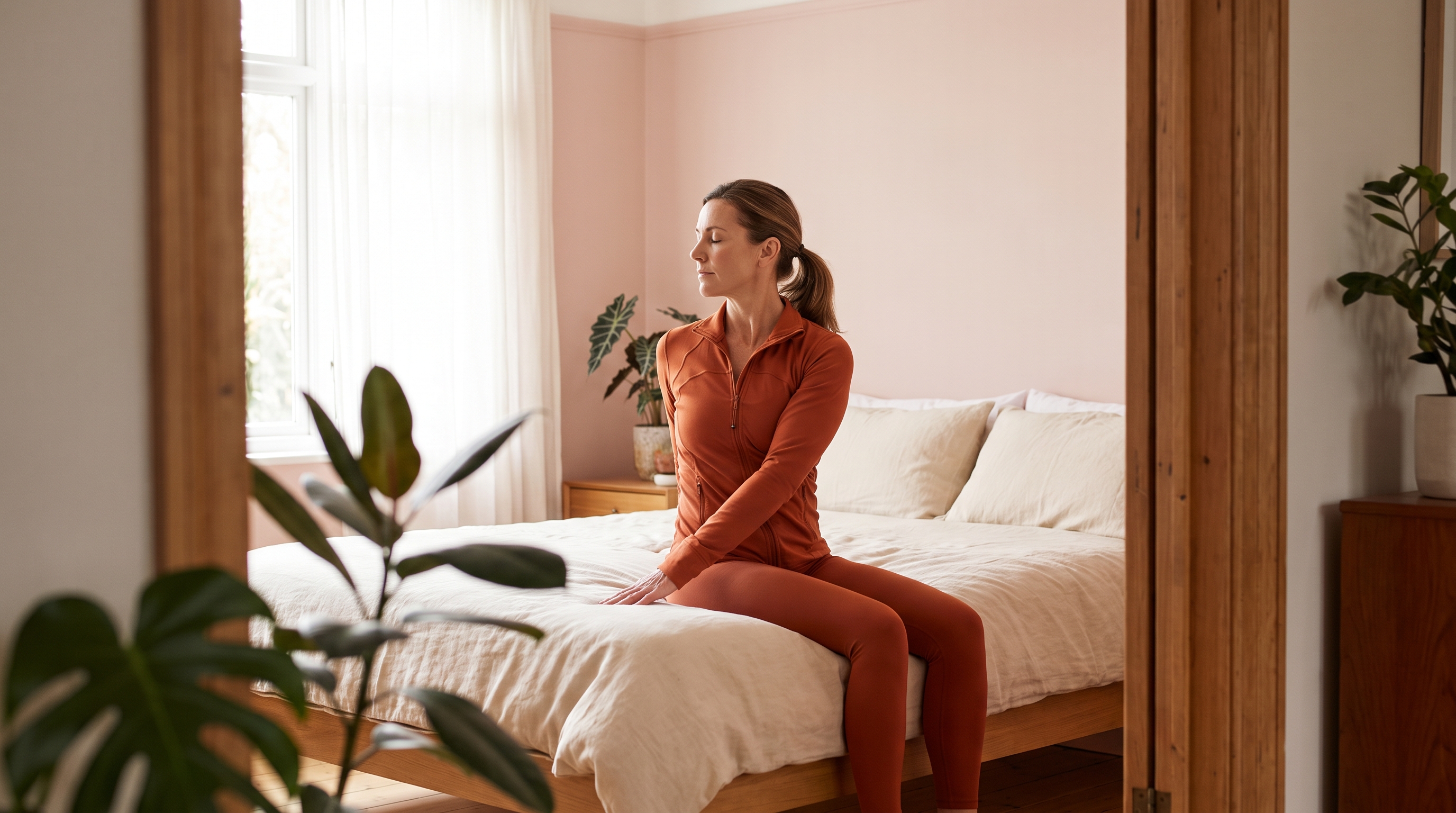
Strengthen Your Pelvic Floor
Rebuild Your Core Confidence
Making This Routine Part of an Ordinary Week
The simplest next step is picking three fixed moments this week and attaching a short session to each one, rather than waiting for a free afternoon that may not show up. Small and repeatable beats occasional and ambitious every time with this muscle group.
If you'd rather follow a structured plan than build one from scratch, Kegel Care gives you the sessions, the tracking and the reminders in one place, so the only thing left to do is show up.
FAQ
A short session or two, each lasting a few minutes, is enough for most weeks rather than dozens of repetitions in one go. Quality of the squeeze and release matters more than the raw number.
A muscle can be adapting before you consciously notice it, since early changes tend to be subtle. Sticking with short consistent sessions through the quiet weeks is normal and part of how this works.
This is common and not a sign you're doing something wrong, it just means the squeeze needs a clearer cue. Guided audio sessions, like the ones inside Kegel Care, talk you through the contraction and release in real time so you're not guessing.
Usually it's not discomfort, it's simply forgetting, since there's no visible gym or workout clothes to prompt the habit. Attaching sessions to an existing daily routine, like brushing teeth, tends to solve this better than relying on memory alone.
Share this post