Foods High in Magnesium: Practical Ways to Get What You Need
By:Author:Kegel Care Editorial
Updated on:October 16, 2026
- What a Day of Magnesium Rich Eating Looks Like
- How Much Magnesium You Actually Need Day to Day
- Why Whole Food Sources Beat Supplement Shortcuts
- Making Magnesium Rich Foods Work on a Busy Week
- Adjusting Magnesium Intake for Different Situations
- When Changes From Eating More Magnesium Tend to Show
- Letting Kegel Care Support Your Daily Food Habits
- Building a Week Around Magnesium Rich Choices
The most direct answer: magnesium shows up in leafy greens, nuts, seeds, beans, whole grains and some fish, and most people can cover their needs by working a handful of these into meals they already eat.
Magnesium is involved in hundreds of processes in the body, from muscle contraction to energy production, which is why it turns up on so many food labels and supplement shelves.
This guide covers what a normal day of magnesium-rich eating looks like, how much you actually need, why food tends to beat supplements for most people, and how to fit it into a week that is already full.
What a Day of Magnesium Rich Eating Looks Like
You do not need a special diet plan to get more magnesium. Here is one example of a normal day built around foods that happen to be good sources.
A Sample Day
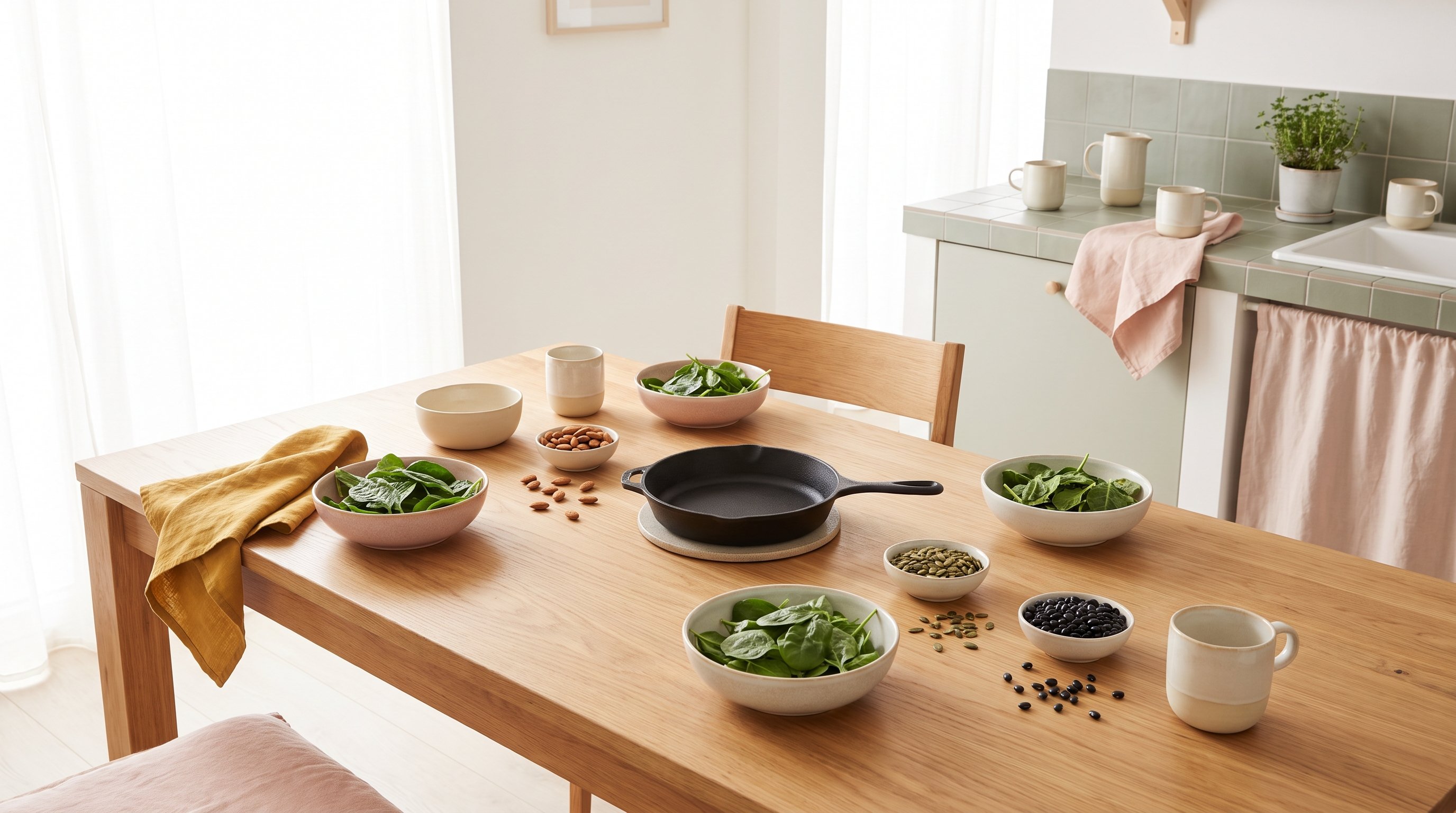
- Breakfast - porridge made with oats, topped with a handful of pumpkin seeds
- Lunch - a wholegrain wrap with spinach, black beans and avocado
- Snack - a small handful of almonds or cashews
- Dinner - grilled salmon with brown rice and steamed broccoli
- Evening - a square or two of dark chocolate
None of this requires weighing food or tracking numbers. Swap in whichever of these you already like and the magnesium tends to follow.
How Much Magnesium You Actually Need Day to Day
A Rough Guide to Common Sources
There is no single magic number that applies to everyone, but knowing roughly where magnesium is concentrated makes it easier to build meals around it.

| Food | Typical Serving | Why It Helps |
|---|---|---|
| Pumpkin seeds | Small handful | One of the denser sources |
| Almonds | Small handful | Easy snack addition |
| Spinach | One cup cooked | Also adds fibre |
| Black beans | Half cup cooked | Works in wraps or bowls |
| Dark chocolate | One to two squares | Higher cocoa content helps |
Spreading a few of these across breakfast, lunch and dinner adds up faster than trying to get it all from one meal.
Why Whole Food Sources Beat Supplement Shortcuts
A magnesium supplement is a pill you remember to take, or forget to take, every single day with no other benefit attached to it.
Food you already enjoy is a meal you were going to eat anyway, which means the habit does not depend on willpower the same way a pill does.

Beans, nuts, seeds and leafy greens also bring fibre, protein and other nutrients along for the ride, which a standalone supplement cannot offer.
That is the real argument for food first: it is the easier route to repeat, and the easier route is the one that actually gets followed week after week.
Making Magnesium Rich Foods Work on a Busy Week
Nobody has time to plan every meal around a nutrient chart, and that is fine, because small swaps do most of the work.
Keep a bag of almonds at your desk, add a handful of spinach to whatever you are already cooking, or pick wholegrain bread over white when you are at the shop.
If you are already using something like Kegel Care to keep track of daily habits such as hydration, the same kind of simple daily tracker can work just as well for a food swap you are trying to build - it just means one more small box ticked instead of one more thing to remember from scratch.
The point is not perfection. It is making the better option the easier option, most of the time.
Adjusting Magnesium Intake for Different Situations
If You're New to Thinking About This
Start with one swap, not five. Add spinach to a meal you already cook, or keep a bag of nuts nearby instead of reaching for crisps.
If You're Short on Time
Lean on foods that need no preparation: nuts, seeds, pre-washed spinach, tinned beans. None of these require cooking skills or extra time at the stove.
If You're Older and Eating Less Than You Used To
Smaller appetites mean every bite matters more, so favour foods that are dense in nutrients rather than filling up on low-value snacks; speak to a clinician if you are managing other health conditions alongside changes to your diet.
If You're Already Eating Fairly Well
Look for the gaps. If your week is light on beans, seeds or leafy greens, that is the easiest place to add one more portion.
When Changes From Eating More Magnesium Tend to Show
This is where most people expect something fast and get discouraged when nothing feels different after a few days.
Food-based changes tend to work slowly and quietly in the background rather than announcing themselves, so it helps to think in weeks rather than days.
The habit is the goal, not a specific date on the calendar. Keep repeating the swaps and let the rest take the time it takes.
Letting Kegel Care Support Your Daily Food Habits
Eating better is one habit among several that tend to reinforce each other, alongside hydration, movement and rest.
Kegel Care was built around pelvic health, but its daily habit trackers and lifestyle challenges work for any small routine you are trying to keep going, including a food swap like adding more magnesium-rich options to your week.
Pairing a simple tracker with a simple goal - one more handful of nuts, one more cup of spinach - tends to be more sustainable than trying to overhaul your whole diet at once.
Strengthen Your Pelvic Floor
Rebuild Your Core Confidence
Building a Week Around Magnesium Rich Choices
Pick one meal this week and add a magnesium-rich food to it: spinach in the pasta, beans in the wrap, nuts in the morning oats.
Kegel Care can help you track that small habit alongside anything else you are building, so it does not get lost in a busy week.
FAQ
Leafy greens, nuts, seeds, beans and wholegrains are among the most practical everyday sources. Dark chocolate and some fish also contribute meaningful amounts.
For most people, a varied diet that includes several of these foods covers daily needs without extra pills. Food also brings fibre and other nutrients that a supplement alone does not provide.
Nuts, seeds and wholegrains are easy substitutes that need little preparation and fit into snacks or breakfast. Small swaps across the day add up even without a big vegetable habit.
Pick one swap at a time rather than overhauling every meal at once, and track it somewhere simple so it does not slip. Kegel Care's habit trackers work for this kind of small daily goal just as well as they do for hydration or wellness routines.
Share this post