Anti Inflammatory Foods: Daily Diet vs Supplement Shortcut
By:Author:Kegel Care Editorial
Updated on:October 16, 2026
- The Myth of a Meal That Fixes Inflammation Overnight
- How Anti Inflammatory Eating Actually Works in the Body
- What Changes How Much These Foods Actually Help
- A Sample Day Built Around Anti Inflammatory Eating
- Making Anti Inflammatory Eating Fit an Ordinary Week
- When Changes From Anti Inflammatory Eating Tend to Show
- Mistakes That Undo Anti Inflammatory Eating Efforts
- Where Kegel Care Fits Around Anti Inflammatory Eating
- Putting Anti Inflammatory Foods Into Your Own Week
Anti inflammatory foods work by supplying the body with compounds - fibre, healthy fats, antioxidants - that support its own regulation of inflammation, rather than switching it off directly. No single meal does this; it is the pattern over weeks that matters.
Inflammation itself is not the enemy. It is a normal response, and food can only nudge the balance, not override it, which is why consistent eating habits beat any single ingredient.
This article covers the myth of the instant fix, how food actually plays into this process, what changes the result, a sample day of eating, and where a supplement might fit alongside a plate that is already doing the work.
The Myth of a Meal That Fixes Inflammation Overnight
There is no single food or meal that resolves inflammation overnight, and no food targets one area of the body while leaving the rest untouched.
The body does not work that way. Nutrients travel through the bloodstream and get used wherever the body needs them, not wherever you want them to go.
The real answer is less dramatic but more useful: a consistent pattern of fibre, healthy fats and plant variety, kept up over time, is what supports the body's own regulation of inflammation.
How Anti Inflammatory Eating Actually Works in the Body
Two separate things are going on when people talk about eating this way - what certain foods supply, and what the overall pattern avoids.
What Whole Foods Supply
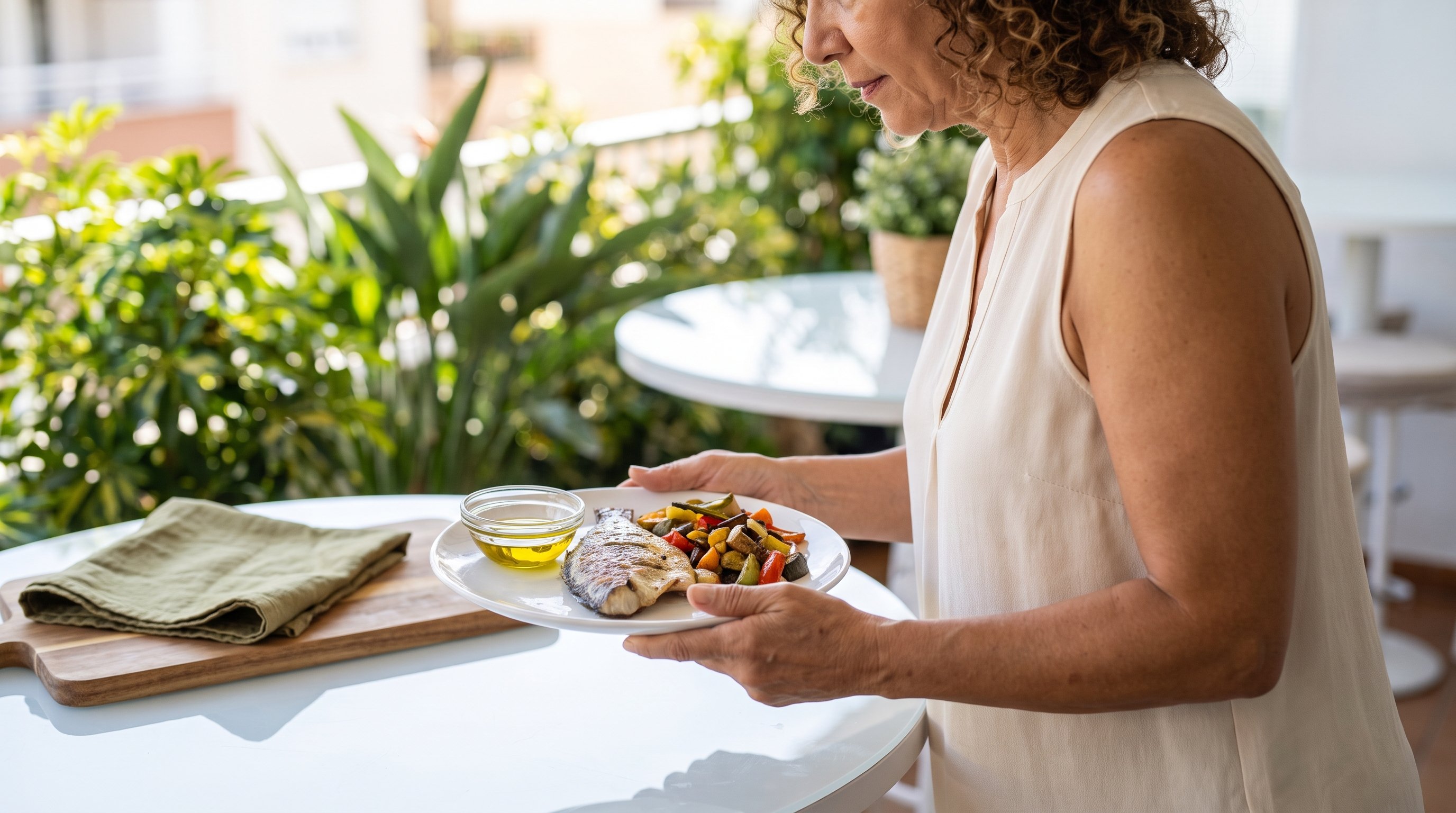
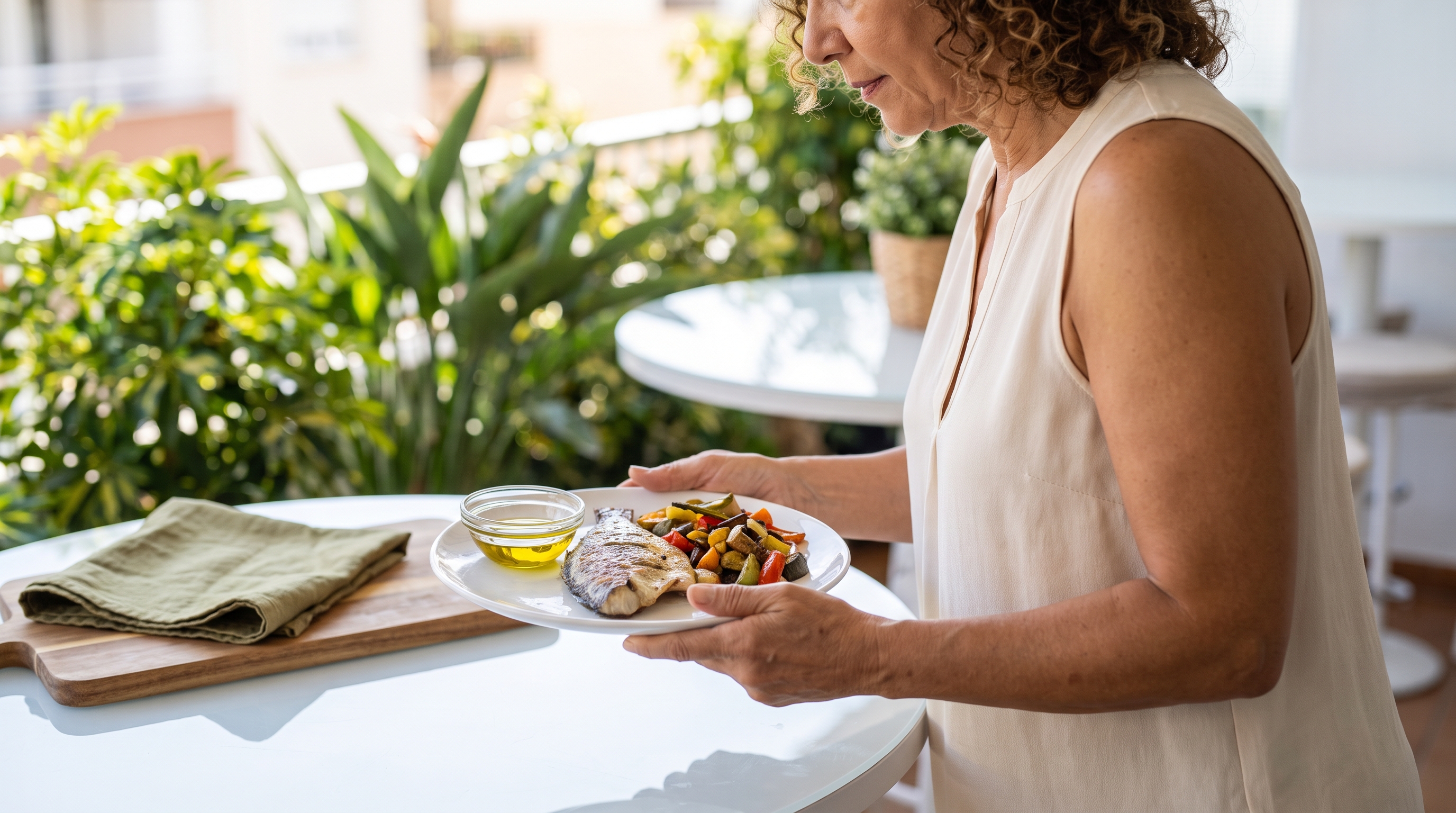
Vegetables, fruit, oily fish and olive oil bring fibre, omega-3 fats and antioxidant compounds that support the body's own processes for managing inflammation, rather than acting as a direct switch.
What a Varied Diet Avoids
A diet built around whole foods naturally leaves less room for the highly processed, sugar-heavy items that are more commonly linked with higher inflammatory markers, simply because the plate is full of something else instead.
Put together, it is less about one hero ingredient and more about what the rest of the plate is doing across the week.
What Changes How Much These Foods Actually Help
Three things decide whether this way of eating makes a noticeable difference, and the order matters.
The Three Biggest Levers
- Consistency over time - a single salad does nothing; the same pattern repeated across weeks is what gives the body something to work with.
- Variety of plant foods - different vegetables, fruits, nuts and herbs bring different compounds, so rotating what is on the plate matters more than eating the same thing on repeat.
- What gets crowded out - the more space whole foods take up on the plate, the less room there is for the processed options that work against the goal.
A Sample Day Built Around Anti Inflammatory Eating
This is one way a day could look. It is a template to adapt, not a rule to follow exactly.
| Meal | Example |
|---|---|
| Breakfast | Oats, berries, walnuts |
| Lunch | Leafy greens, chickpeas, olive oil |
| Snack | Carrot sticks, hummus |
| Dinner | Oily fish, mixed vegetables |
| Evening | Herbal tea, handful nuts |

None of these meals needs to be perfect or expensive - the point is variety and repetition, not precision.
Making Anti Inflammatory Eating Fit an Ordinary Week
Most people do not fail at this because the food is hard to find - they fail because life gets busy and the easy option wins by default.
Batch-cooking a base of vegetables and grains at the start of the week removes the daily decision, which is often the actual barrier.
Food is one half of a wider wellness routine, and habit trackers can sit alongside it, keeping hydration and daily wellness routines in one place so eating well is not the only thing you are trying to remember.
When Changes From Anti Inflammatory Eating Tend to Show
There is no fixed point where this way of eating suddenly starts working - it is more of a gradual shift than a switch.
Early weeks are mostly about building the habit itself: shopping differently, cooking differently, choosing differently when the processed option is right there.
This is also where most people quit, right before the pattern has had enough time to become normal rather than effortful.
Mistakes That Undo Anti Inflammatory Eating Efforts
Chasing a Single Superfood
No one ingredient carries the whole effort, so relying on one food while the rest of the diet stays the same will not move the needle.
Going All-In for a Week Then Stopping
A short burst of perfect eating followed by a return to old habits gives the body nothing consistent to respond to - steady and ordinary beats intense and brief.

Ignoring What Gets Added Back In
Adding vegetables without reducing processed foods elsewhere just adds more to the plate rather than shifting the balance of it.
Treating Supplements As a Replacement
A supplement can fill a specific gap, but it cannot replicate the fibre and variety of compounds that come from eating a range of whole foods.
Expecting a Fast, Visible Result
Because the body adjusts gradually, looking for an overnight change usually ends in disappointment and an early exit from an otherwise reasonable plan.
Where Kegel Care Fits Around Anti Inflammatory Eating
Diet is only one part of a daily routine, and keeping track of everything else can be the part that quietly falls apart first.
Kegel Care brings together habit trackers for hydration and wellness routines, hand-selected lifestyle challenges, and a specialist-curated article library, so eating well sits alongside pelvic floor training and daily routines instead of competing with them for attention.
It also includes guided audio and video routines built to fit a real schedule, which means the structure around building consistent habits does not have to be built from scratch.
Strengthen Your Pelvic Floor
Rebuild Your Core Confidence
Putting Anti Inflammatory Foods Into Your Own Week
The most useful first step is small: add one more vegetable to a meal you already eat this week, rather than rebuilding the whole diet at once.
Kegel Care can hold the rest of the routine - hydration, habits and daily consistency - while that one plate-level change becomes normal.
FAQ
Whole foods rich in fibre, healthy fats and plant variety support the body's own regulation of inflammation when eaten consistently over time. A single meal will not do this - the pattern across weeks is what counts.
A supplement can fill a specific gap, but it cannot replicate the full mix of fibre and compounds found across a varied diet of whole foods. Food first tends to cover more ground than any single capsule.
Batch-cooking a simple base of vegetables and grains once a week removes most of the daily decision-making that trips people up. Habit trackers can help keep the rest of the routine - hydration, consistency - in one place while that habit beds in.
Most people quit in the early weeks, right when the habit still feels effortful rather than automatic. Sticking with an ordinary, repeatable pattern matters more than any short burst of perfect eating.
Share this post